

Introduction
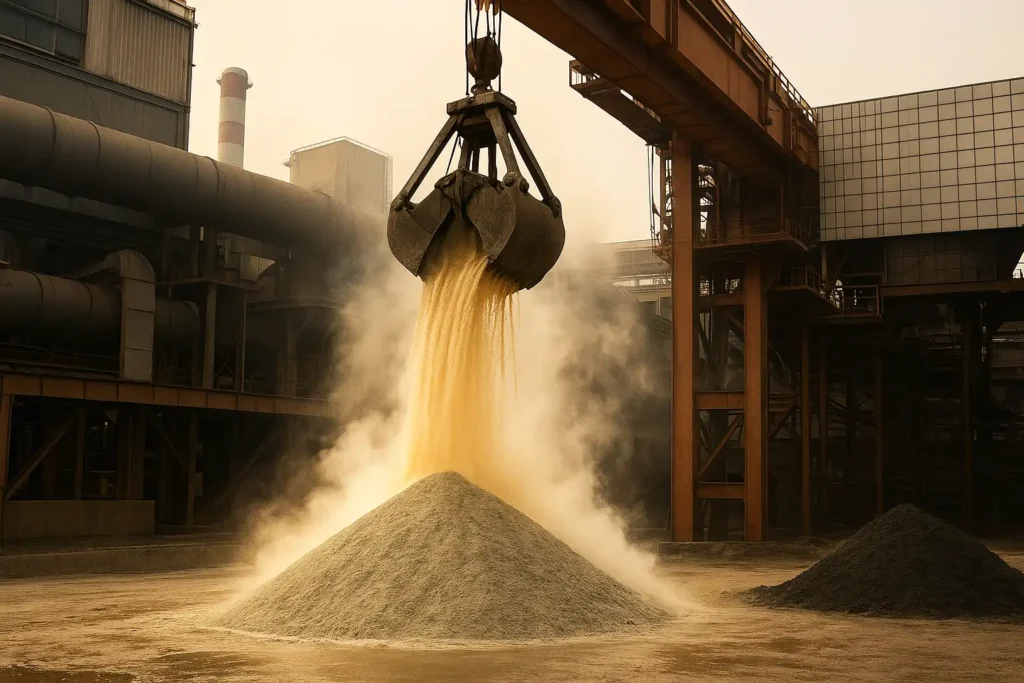
In October 2025, China announced a major expansion of its rare earth export control regime, adding holmium, erbium, thulium, europium, and ytterbium — along with certain processing equipment — to the list of monitored items. Reuters+1 This move sends ripples across global supply chains. For Yiwu exporters, especially in sectors like religious jewelry and accessories, although their core products don’t typically use raw rare earth materials, components such as magnets, coatings, adhesive layers, or luminous elements may still embed trace rare earths and thus be indirectly affected.
This article explores practical strategies for Yiwu exporters — including religious jewelry brands like ReligionRosary.com — to realign product structures, fortify supply chains, and reposition market focus, thereby turning policy shock into new growth momentum.
1. Policy Highlights & Scope Clarification
- Expanded Control List
The Ministry of Commerce’s new announcement includes five additional rare earth elements and dozens of pieces of processing equipment now subject to export licensing and restrictions. Reuters+1 - Indirect Product Exposure
Religious jewelry products may not be direct rare earth items, but many use magnetic clasps, luminous coatings, magnetized packaging, auto-rotating stands, LED inserts, or decorative magnetic assemblies. If any of those subcomponents contain restricted rare earth materials or were processed via controlled equipment, they risk falling under scrutiny. - Heightened Customs & Permit Risk
Exporters may now face stricter customs reviews, demands for component sourcing declarations, and delays if supporting technical documentation is lacking. Export licensing may be required for items containing controlled elements or made with controlled equipment. Reuters
As such, even for religious and decorative accessories, exporters must treat this policy change as a supply chain “stress test.”
2. Product & Component Strategy: Reconfiguration & Substitution
- Segmentation & Product Line Differentiation
- Split your stock into “safe / non-sensitive” and “high-risk / containing magnetic / luminous parts” lines.
- For high-risk lines, maintain extra documentation and supplier traceability.
- For the safe lines, emphasize non-magnetic, non-luminous materials.
- Material Replacement & Design Innovation
- Where possible, replace rare-earth magnets with ferrite magnets or non-magnetic clasp mechanisms in pendant, rosary, or rosary bracelets.
- Replace rare-earth-based luminous pigments with photoluminescent or tritium alternatives (if regulations allow).
- Simplify mechanisms: avoid motorized or magnetic moving parts when not essential.
- Component Due Diligence & Certification
- Require component suppliers to issue material composition certificates and elemental analysis (via XRF or lab test).
- Maintain a parts database recording whether each component has rare-earth content, supplier source, batch numbers, and test reports.
- If feasible, obtain third-party “non-rare earth” or “restricted-element-free” certifications to use as promotional differentiators.
- Redesign for Modularity & Upgradability
- Design your products so that risky components (e.g. magnetic clasp insert) can be replaced easily by clients in future versions.
- Offer optional upgrades or accessory modules that use compliant materials.
By doing so, you’re not just reacting, but embedding resilience into your design architecture.
3. Supply Chain & Risk Management: Traceability & Alternatives
- Supplier Audits & Backup Pools
- Perform stricter audits of your existing component suppliers to ensure they are not using newly controlled materials.
- Maintain a backup supplier list in jurisdictions less affected by rare earth restrictions.
- For strategic components, aim for dual sourcing (one local, one overseas) to mitigate sudden supply interruption.
- Material Traceability & Documentation Workflow
- For every component procured, collect supplier declaration, certificate of analysis, batch trace info, and usage record.
- Keep a digital archive. During export declarations or customs scrutiny, you can produce the chain-of-custody.
- Pre-export Compliance Checks
- Before bulk production, run a “compliance audit” on sample products: test for prohibited elemental content.
- Engage export agents or customs compliance consultants to screen shipments before they leave the factory.
- Zone Processing or Light Assembly Abroad
- Where feasible, ship semi-finished components to a regional hub (e.g. Southeast Asia) for final assembly using non-sensitive parts, thereby reducing exposure.
- Use bonded warehouses or free-trade zones to allow flexibility in modifying components before export.
4. Market Layout: Diversify & Deepen Focus
- Expand into Lower-Regulation Markets
- Beyond traditional North America / Europe, increase effort in Latin America, Southeast Asia, South Asia, and parts of Africa, where regulatory scrutiny on rare earth content is lighter and religious goods demand is strong.
- Tailor smaller SKUs, starter kits, and local-religion-themed designs.
- Strengthen Branding & Value Messaging
- Emphasize “Non-Rare-Earth Components,” “Compliance Inspected,” “Eco & Faith Friendly” in your marketing materials.
- Build your reputation as a trusted, responsible religious jewelry supplier rather than a mere low-cost source.
- Offer Value-added Services
- Provide custom branding, multi-language packaging, gift-box sets, religious context inserts, and small-lot quick-turn options.
- Offer pre-compliance consultation for overseas buyers, so they trust your shipments more.
- Regional Warehousing & Logistics
- Establish distribution centers in key markets (e.g. Europe, Latin America) to pre-position inventory—this reduces lead times and mitigates export permit risk.
- Use dropshipping / cross-border e-commerce for low-volume orders to test new markets with minimal risk.
5. Conclusion: From Policy Shock to Strategic Leap
The October 2025 expansion of China’s rare earth export controls presents a stark wake-up call for all exporters, even ones in traditionally low-risk sectors like religious jewelry. But crisis and opportunity often travel together.
Yiwu exporters who can restructure product lines, enforce supply chain traceability, pre-empt compliance, and reorient toward diversified markets will emerge stronger. For ReligionRosary.com, such adjustments can transform constraints into a unique competitive edge: offering faith-based products that are not only beautiful and meaningful, but also transparent, compliant, and resilient.
FAQs
- Will religious jewelry items be affected by China’s new rare earth export controls?
Most religious jewelry products themselves are not direct rare earth items. However, if they contain magnetic clasps, luminous pigments, LED inserts, or motorized parts, and those components use restricted rare earth elements or processing equipment, they may require additional documentation or be subject to customs scrutiny. - How can exporters verify whether their components contain restricted rare earth elements?
Exporters should request elemental composition certificates and lab test reports (e.g. XRF or ICP) from component suppliers. Maintaining a parts database with supplier traceability helps when undergoing export audits. - What are good substitutes for rare earth magnets or luminous materials in accessories?
Ferrite magnets, non-magnetic clasps, photoluminescent pigments, or mechanical alternatives are common substitutes. The trade-off is usually lower performance, but greater regulatory safety. - Should Yiwu exporters shift focus to new markets due to these controls?
Yes. Markets in Latin America, Southeast Asia, South Asia, and parts of Africa often have less stringent rare earth oversight for religious goods. Diversifying client bases reduces regulatory concentration risk. - Can assembly in regional hubs help mitigate risks?
Yes. By sending semi-finished parts to regional or bonded processing centers (outside China or in FTZs), exporters can finalize assembly with low-risk components and reduce exposure to export license constraints.