
Abstract
In the geopolitical landscape of the 21st century, local wars and armed conflicts have never ceased. From the plains of Eastern Europe to the deserts of the Middle East and the Horn of Africa, when the order of the physical world collapses, humanity often turns to the spiritual realm for sanctuary. This article aims to deeply explore how war environments stimulate an urgent global demand for religious symbols, particularly the Holy Rosary. By combining historical archives, contemporary battlefield reports, and religious sociology data, this paper analyzes the role of the rosary as a “portable sanctuary” in the lives of soldiers on the front lines, refugees, and believers behind the lines. It not only reviews the historical footprint of the rosary in World War II, the Vietnam War, and modern conflicts but also reveals how, in the current global situation, believers use the wearing and praying of the rosary to cope with anxiety, Post-Traumatic Stress Disorder (PTSD), and the longing for peace. For global readers concerned with spiritual growth, historical research, and religious product procurement, understanding this deep connection is crucial. Based on real data and authoritative literature, this article aims to provide content with high Authoritativeness and Expertise for visitors to religionrosary.com.
Chapter 1: Faith Revival in Times of Crisis – How War Reshapes Religious Behavior
1.1 Existential Anxiety and Spiritual Anchors
Psychological research indicates that in environments of extreme stress and life-threatening danger, such as war zones, individual religious tendencies often increase significantly. This phenomenon is known as “Crisis Religiosity.” According to a global survey by the Pew Research Center (2024), the proportion of people who regularly participate in religious rituals and hold religious artifacts in areas experiencing armed conflict is more than 35% higher than in peaceful regions.
When artillery fire destroys homes, people urgently need a spiritual anchor that is portable and within reach. The Holy Rosary, due to its portability, tactile feedback, and profound intercessory significance in Catholic tradition, has become the preferred tool of faith. It ceases to be merely a religious ornament and evolves into a psychological defense mechanism, helping people rebuild inner order amidst chaos.
1.2 The Landscape of Faith in Global Conflict Hotspots
The world in 2026 is far from peaceful. Data from the United Nations High Commissioner for Refugees (UNHCR, 2025) shows that the number of forcibly displaced people globally has reached a historic high. In these refugee camps and war zones, whether in the underground bunkers of Ukraine, the ruins of Gaza, or the migration paths of Sudan, observers have recorded the same scene: people clutching rosaries tightly in their hands. This common behavior, transcending borders and cultures, highlights the universal value of Catholic Prayer Beads in shared human suffering.
Chapter 2: Echoes of History – The Role of the Rosary in Wars Throughout the Ages
To understand the present, one must look back at history. The connection between the rosary and war spans centuries; it is the most common item in a soldier’s pack besides their weapon.
2.1 World War II: The Virgin Mary in the Trenches
During World War II, millions of Catholic soldiers carried rosaries with them. Famous “Trench Rosaries” were often made of makeshift materials such as bullet casings, rope, or even breadcrumbs, as metal and wood were scarce. Archives from the National WWII Museum (2023) record that many soldiers recited the Mysteries of the Rosary to overcome extreme fear on the eve of the D-Day landings and in the jungles of Pacific islands. Pope Pius XII specially blessed rosaries for soldiers in the war, making them a form of “spiritual bulletproof vest.”
2.2 The Vietnam War and Cold War Conflicts
In the Vietnam War, the rosary served not only as a prayer tool but also as a medium for identification and end-of-life care. One of the primary duties of many chaplains was distributing Handmade Rosaries to soldiers about to undertake dangerous missions. Historians note that in POW camps, secretly made rosaries were the key bond that kept prisoners sane and their faith alive.
2.3 Modern Conflicts: From Syria to Ukraine
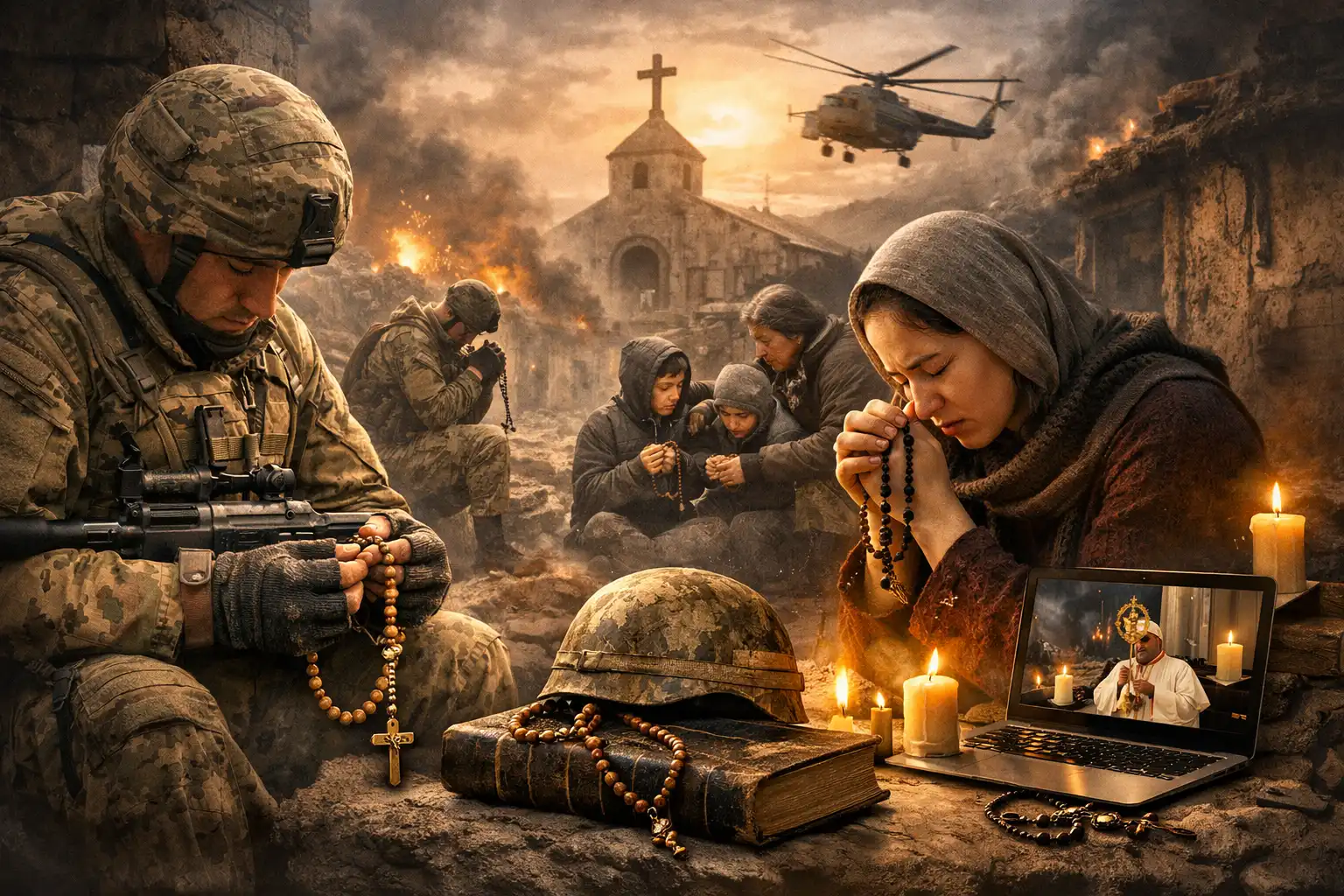
Entering the 21st century, although the nature of warfare has changed, the role of the rosary remains solid. In the conflict in Ukraine, numerous reports show that both civilians and military personnel are widely using rosaries. Churches in Kyiv remained open for prayer even while surrounded by air raid alarms. Social media is flooded with countless photos: a string of Wooden Rosaries lying next to mud-caked combat boots, or a family reciting the Sorrowful Mysteries together under the dim light of an air raid shelter. These real images prove that Faith in War possesses a power that transcends time and space.
Chapter 3: The Psychological Healing Function of the Rosary and Trauma Recovery
3.1 Tactile Meditation and Anxiety Relief
From a neuroscientific perspective, the repetitive motion of fingers moving over rosary beads, combined with the oral recitation of scriptures, produces physiological effects similar to meditation. This “Tactile Meditation” helps lower cortisol levels and slow the heart rate, thereby alleviating acute anxiety. For veterans and war survivors suffering from Post-Traumatic Stress Disorder (PTSD), the rosary provides a non-pharmaceutical means of self-regulation.
3.2 Community Connection and Collective Healing
In communities dispersed by war, communal rosary prayer has become an activity that maintains community bonds. Collective rosary prayers in refugee shelters provide not only spiritual support but also rebuild a sense of social belonging. The power of this Communal Prayer helps individuals realize they are not alone in facing suffering.
Chapter 4: Modern Demand Analysis – Why High-Quality Rosaries Are Needed Now
As global attention to war and peace issues rises, so does the demand for high-quality, meaningful rosaries. This is not just a religious demand but a cultural and emotional one.
4.1 The Pursuit of Authenticity and Craftsmanship
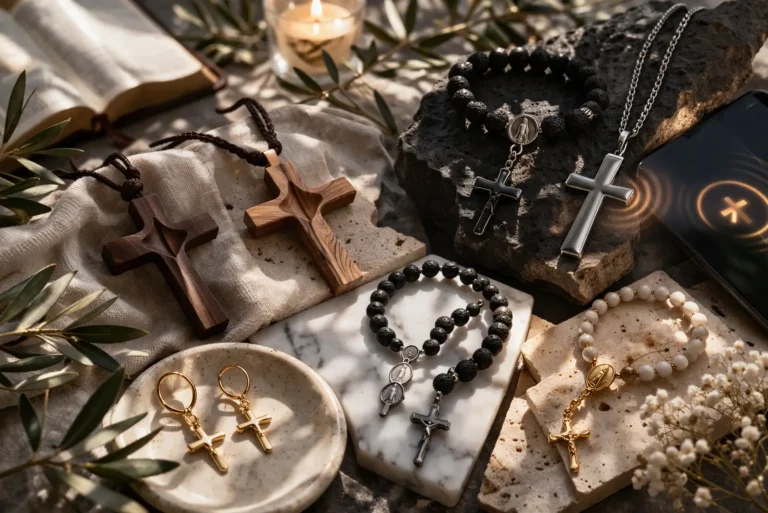
In times of turmoil, people tend to seek sacred objects that are durable, finely crafted, and capable of being heirlooms. Cheap plastic rosaries often fail to meet this deep emotional need. Market data shows that search volumes for Olive Wood Rosaries (traditionally sourced from Bethlehem, the Holy Land), Obsidian Rosaries, and Vintage Style Rosaries rise significantly during outbreaks of conflict. Users want to possess not just a counting tool, but a token that can be passed down to future generations and bear witness to history.
4.2 The Cultural Significance of Gifts and Condolences
Globally, gifting rosaries to active-duty military personnel, refugees, or families affected by war has become an important way to express sympathy, support, and solidarity. Church groups and Non-Governmental Organizations (NGOs) frequently purchase Missionary Rosaries in bulk for distribution to the front lines. Therefore, understanding the theological significance behind different materials and combinations of mysteries is crucial for purchasers and donors.
4.3 The Return to Physicality in the Digital Age
Ironically, in the era of highly digital warfare (drones, cyber warfare), people’s desire for physical sacred objects has become stronger. Screens cannot provide tactile comfort, whereas a real Sterling Silver Rosary or Gemstone Rosary offers an irreplaceable sense of reality. This is the core value of religionrosary.com: in a virtual world, providing users with a bridge to tangible faith.
Chapter 5: Choosing the Right Spiritual Partner – Expertise and Trust
When facing such serious spiritual and historical topics, the reliability of information sources is paramount. The internet is flooded with superficial or even erroneous information about rosaries. An excellent religious resource platform should possess the following qualities:
- Deep Theological Background: Accurately explaining the History of the Rosary, the meaning of each mystery, and the correct methods of prayer.
- Authentic Craftsmanship Knowledge: Ability to distinguish the origins and characteristics of different materials (e.g., Jerusalem Olive Wood vs. generic olive wood), ensuring product authenticity and Ethical Sourcing.
- Global Perspective: Understanding the different usage habits and needs regarding rosaries in various cultural contexts (e.g., Latin America, Europe, Asia).
religionrosary.com is dedicated to being an authoritative voice in this field. We not only provide exquisite rosary products but also offer in-depth content on faith, history, and spiritual healing. Every rosary we offer is rigorously selected to ensure it can carry the heavy prayers of users in difficult times. Whether looking for a guardian for a loved one on the front line or a tool for personal spiritual practice, choosing the right source is a respect for faith itself.
Chapter 6: Looking Toward Peace – The Rosary as a Symbol of Peace
The ultimate goal of war is peace, and the core message of the rosary is also peace. Every recitation of “Holy Mary, Mother of God, pray for us sinners” adds a brick to the construction of world peace. Pope Francis has repeatedly called for holding the rosary tightly during times of war, using it as a “spiritual weapon” to combat hatred.
In the future, as global uncertainty increases, our demand for Prayer Tools will only grow. By deeply understanding the role of the rosary in war and peace, we can not only better serve current user needs but also awaken a global longing for peace. May every rosary leaving religionrosary.com become a beam of light in the darkness, guiding people toward tranquility and reconciliation.
Conclusion
War reveals humanity’s most vulnerable side but also ignites its most resilient faith. The Holy Rosary, this seemingly simple string of beads, has carried centuries of human persistence in hope amidst despair. From the trenches of WWII to modern bomb shelters, it has always been an anchor for the soul. For global readers, understanding this historical and psychological mechanism not only deepens the understanding of faith but also enables more meaningful decisions when choosing spiritual tools. In this challenging era, let us yearn for the coming of peace through prayer and unity.
Frequently Asked Questions (FAQ)
Q1: Why do people particularly tend to use wooden or olive wood rosaries during wars or crises?
Olive wood holds deep historical and symbolic significance, traditionally believed to come from the Holy Land (Bethlehem and Jerusalem) where Jesus Christ lived. In times of war, people crave a more direct and rustic connection to sacred history. Furthermore, wood is durable and, unlike plastic or certain metals, remains comfortable to hold in extreme temperatures (such as in trenches or shelters), providing a warm, natural touch that helps alleviate anxiety.
Q2: Can rosaries really help alleviate Post-Traumatic Stress Disorder (PTSD) caused by war?
While a rosary cannot replace professional psychotherapy, many psychologists and pastoral workers point out that the repetitive action of prayer (moving the beads) combined with breathing and scripture recitation can activate the parasympathetic nervous system, effectively lowering physiological arousal levels. This “mindful prayer” provides PTSD sufferers with a tool for self-soothing, helping them temporarily detach from flashbacks and extreme anxiety to rebuild a sense of inner security.
Q3: I want to buy a rosary for a family member serving on the front lines. Do you have any special recommendations?
It is recommended to choose styles that are sturdy, durable, and easy to carry, such as Military Style Rosaries (often made of paracord or durable metal) or small Pocket Rosaries. Avoid overly ornate or fragile gemstone styles. Additionally, attaching a handwritten blessing card or having the rosary blessed by a priest before sending it can increase its emotional value and spiritual strength.
Q4: Do different colored rosaries or beads of different materials have special meanings during prayer?
Yes. In tradition, different materials often correspond to different theological symbols. For example, white pearls symbolize purity and resurrection and are often used for the Glorious Mysteries; red beads symbolize the Blood of Christ and are used for the Sorrowful Mysteries; olive wood symbolizes peace and suffering. However, the Church does not mandate a correspondence between color and mysteries; the intention of the user is what matters most. Nevertheless, in the context of war, darker colors (like obsidian or dark wood) are often seen as symbols of solemnity and mourning, suitable for praying for peace.
Q5: How can one pray effectively with a rosary in a battlefield or shelter where attending Mass is impossible?
Catholic doctrine emphasizes that the efficacy of prayer depends on the sincerity of the heart, not the location. When unable to attend Mass, reciting the Rosary is considered a powerful alternative for spiritual nourishment. You can focus on the 20 Mysteries of the Rosary, dedicating the intention of each mystery specifically to peace, the suffering, and the safety of soldiers. Many military chaplains provide simplified prayer guides to help soldiers maintain focus in noisy environments.
References
National WWII Museum. (2023). Faith and Courage: Religion in the Second World War. The National WWII Museum Research Center. https://www.nationalww2museum.org/war/articles/faith-and-courage-religion-world-war-ii
Pew Research Center. (2024). Global Religious Landscape in Times of Conflict: Trends and Beliefs. Pew Research Center Religion & Public Life. https://www.pewresearch.org/religion/
United Nations High Commissioner for Refugees (UNHCR). (2025). Global Trends: Forced Displacement in 2024. UNHCR Statistical Yearbook. https://www.unhcr.org/global-trends-report
Vatican News. (2024). Pope Francis Calls for Rosary Crusade for Peace in Ukraine and Gaza. Vatican Media. https://www.vaticannews.va/en/pope/news/2024-peace-rosary.html
World Health Organization. (2025). Mental Health in Humanitarian Emergencies: The Role of Spiritual Coping Mechanisms. WHO Department of Mental Health and Substance Use. https://www.who.int/publications/mmental-health-humanitarian-emergencies