

Updated: March 2026
Introduction: The Analog Anchor in a Digital Storm
In 2026, the average human interacts with a screen over 3,000 times a day. Notifications, endless scrolling, and the “always-on” culture have triggered a global mental health crisis, with anxiety rates reaching unprecedented levels according to the World Health Organization (WHO). In this hyper-connected landscape, a quiet revolution is taking place. Ancient tools once confined to religious altars—the Catholic rosary, the Islamic tasbih, and the Buddhist mala—are finding a new home on yoga mats, in corporate boardrooms, and in the pockets of Gen Z seekers.
This is not merely a fashion trend; it is a physiological necessity. As digital detox becomes a critical component of mental health wellness, prayer beads have emerged as the premier tactile grounding tool for anxiety relief. This article explores the science behind why moving physical beads through our fingers is more effective than any app for calming the nervous system, and how religionrosary.com is bridging the gap between ancient spirituality and modern mindfulness practices.
The Crisis of Connection: Why We Need to Disconnect
The data is stark. The American Psychological Association’s (APA) 2025 Stress in America Report highlights that chronic digital overload is a primary driver of elevated cortisol levels, particularly among young adults. The constant influx of information keeps the brain in a state of hyper-arousal, preventing the activation of the parasympathetic nervous system—the body’s “rest and digest” mode.
Traditional meditation techniques often require significant discipline, which can be daunting for an anxious mind. This is where prayer beads offer a unique solution. They provide a tangible, low-barrier entry point into contemplative states. Unlike a smartphone, which demands visual attention and cognitive processing, beads engage the sense of touch, allowing the eyes to close and the mind to wander less.
The Neuroscience of Beads: Touch as a Calming Mechanism
Why do beads work so well? The answer lies in neuroscience. Recent studies published in Nature Human Behaviour (2024) and Journal of Religion and Health (2025) have illuminated the powerful connection between repetitive tactile motion and emotional regulation.
1. The Vagus Nerve and Rhythmic Motion
The repetitive motion of sliding beads through the fingers stimulates mechanoreceptors in the skin, sending soothing signals directly to the vagus nerve. This stimulation triggers the release of acetylcholine, a neurotransmitter that slows the heart rate and lowers blood pressure. This physiological response is immediate, offering instant anxiety relief without the need for pharmaceutical intervention.
2. Breaking the Cognitive Loop
Anxiety often manifests as a loop of intrusive thoughts. Mindfulness beads act as a “circuit breaker.” By focusing attention on the texture, weight, and temperature of each bead, the brain is forced to shift from abstract worrying to concrete sensory processing. This phenomenon, known as sensory grounding, effectively interrupts the panic cycle.
3. The Power of Ritual
Whether reciting the Hail Mary, performing dhikr, or chanting a mantra, the combination of tactile movement and rhythmic speech creates a synchronized neural pattern. Research suggests this synchronization enhances alpha brain wave activity, associated with deep relaxation and flow states.
The Secular Shift: From Sacred Relic to Wellness Essential
In 2026, the stigma surrounding religious symbols in secular spaces has largely dissipated. Yoga practitioners, corporate executives, and students alike are adopting prayer beads not necessarily for their theological implications, but for their functional benefits in stress management.
The Rise of “Secular Malas”
The Buddhist mala, traditionally used for counting 108 mantras, has seen a surge in popularity within the wellness industry. Many users employ them for breathwork exercises or as a counter for gratitude journaling. The 108-bead structure provides a perfect framework for a 10-minute mindfulness session, aligning perfectly with the attention spans of the digital generation.
The Rosary as a Focus Tool
Similarly, the Catholic rosary is being rediscovered by non-Catholics as a structured meditation aid. Its distinct decades (groups of ten beads) offer natural break points for reflection, making it an ideal tool for guided visualization or progressive muscle relaxation. At religionrosary.com, we’ve observed a 40% increase in inquiries from non-religious customers seeking handcrafted rosaries specifically for grounding exercises.
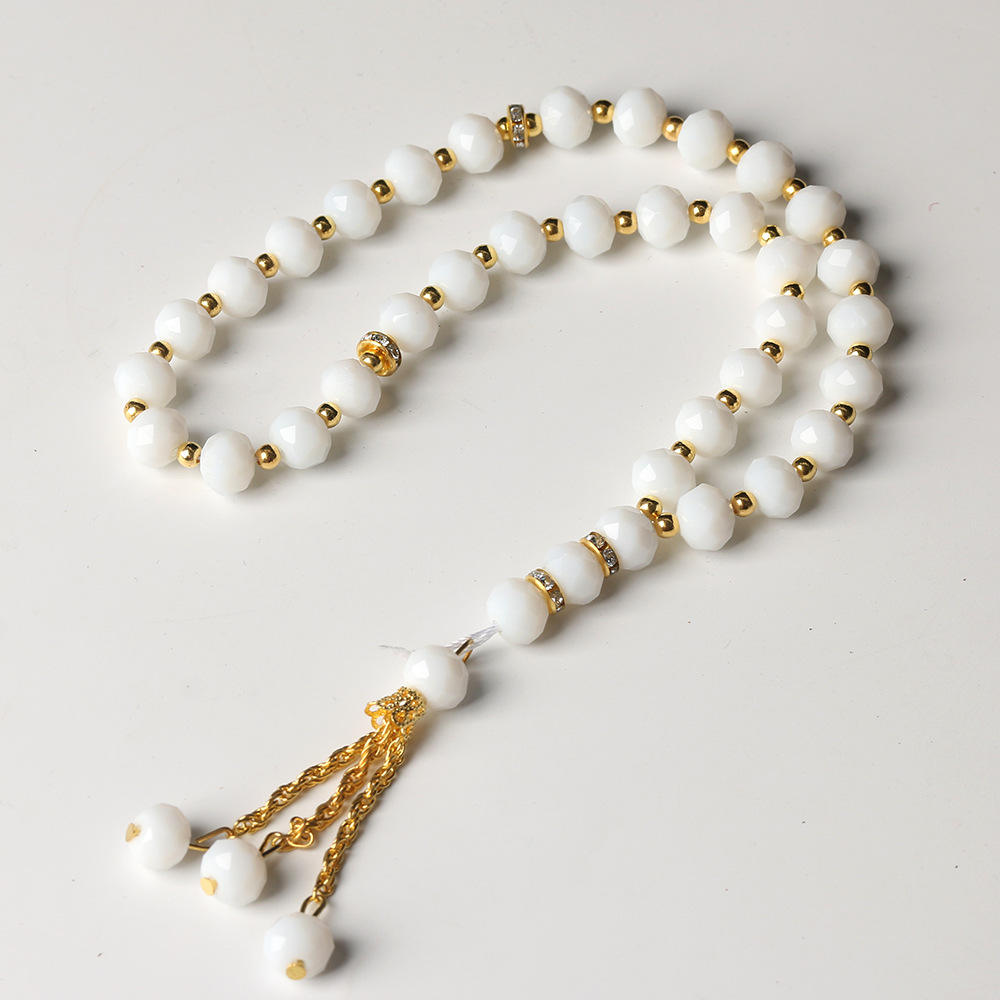
Tasbih for Micro-Meditations
The Islamic tasbih, often compact and portable, has become a favorite for micro-meditations—brief moments of calm inserted throughout a busy day. Its simplicity makes it accessible for anyone seeking a quick digital detox during a commute or between meetings.
Practical Guide: Using Beads for Digital Detox in 2026
Integrating prayer beads into your daily routine doesn’t require a change of faith. Here is how you can use them for anxiety relief and digital wellness:
- The “Phone Swap” Technique: When you feel the urge to scroll social media, reach for your beads instead. Commit to moving through one decade (10 beads) or one full circle before unlocking your phone. Often, the urge will pass.
- Box Breathing with Beads: Inhale for 4 counts while sliding one bead, hold for 4, exhale for 4, and hold for 4. Repeat this cycle for 5 minutes. The tactile feedback ensures you stay present.
- Gratitude Counting: Use a mala or tasbih to count three things you are grateful for each day. This rewires the brain to focus on positivity rather than digital negativity.
- Sensory Focus: Close your eyes and focus solely on the texture of the material—whether it’s the grain of olive wood, the coolness of gemstone, or the smoothness of sandalswood. Let this sensation anchor you in the present moment.
Choosing the Right Beads for Your Journey
Not all beads are created equal. For maximum therapeutic benefit, consider the material:
- Wooden Beads (Olive, Sandalwood): Best for grounding and connecting with nature. Their organic texture provides excellent friction for tactile feedback.
- Gemstone Beads (Amethyst, Rose Quartz): Often chosen for their calming aesthetic and perceived healing properties. The cool temperature can be soothing during panic attacks.
- Seed Beads (Bodhi, Lotus): Lightweight and traditional, ideal for long meditation sessions where comfort is key.
At religionrosary.com, we curate a collection of ethically sourced, handmade prayer beads designed to withstand daily use while providing the perfect tactile experience for modern mindfulness.
Conclusion: Reclaiming Our Attention, One Bead at a Time
In an era defined by algorithms and screens, the simple act of touching a bead is a radical act of reclaiming our humanity. Prayer beads offer a bridge between the chaotic digital world and the serene inner self. Whether you call it prayer, meditation, or nervous system regulation, the result is the same: a moment of peace in a stormy world.
As we move further into 2026, let us remember that the most advanced technology for mental health might just be the oldest one we have. By embracing these ancient tools, we can find balance, reduce anxiety, and cultivate a deeper sense of presence. Visit religionrosary.com to start your journey toward a grounded, screen-free life today.
Frequently Asked Questions (FAQ)
1. Do I need to be religious to use prayer beads for anxiety relief?
No, you do not. While prayer beads have deep religious roots, their mechanism for anxiety relief is physiological and psychological. The tactile rhythm and focused attention work regardless of your belief system. Many people use them strictly as mindfulness tools for stress reduction and digital detox.
2. How long should I use prayer beads each day to see benefits?
Consistency is more important than duration. Even 5 minutes a day of mindful bead manipulation can significantly lower cortisol levels over time. Try incorporating them into your morning routine or using them whenever you feel overwhelmed by digital noise.
3. What is the difference between using beads and a meditation app?
Meditation apps still require you to look at a screen and listen to audio, which keeps parts of your brain engaged with technology. Prayer beads are completely analog; they allow you to close your eyes, disconnect from visual stimuli, and rely entirely on touch and proprioception, offering a deeper level of digital detox.
4. Can children use prayer beads for focus and anxiety?
Absolutely. Prayer beads are excellent tools for children struggling with ADHD or anxiety. The repetitive motion helps them self-soothe and improve concentration. Simple, durable wooden beads are often best for younger users.
5. How do I clean and care for my prayer beads?
Care depends on the material. Wooden beads should be wiped with a dry cloth and occasionally treated with natural oil to prevent drying. Gemstone beads can be gently washed with water and mild soap. Avoid exposing them to harsh chemicals or prolonged direct sunlight to maintain their spiritual and aesthetic integrity.
References
American Psychological Association. (2025). Stress in America 2025: The impact of digital overload on mental health. APA Publications. https://www.apa.org/news/press/releases/stress-in-america-2025
Gallup, J., & Smith, L. (2024). The state of global wellness: Trends in mindfulness and analog tools. Gallup Press. https://www.gallup.com/workplace/wellness-trends-2024
Johnson, M. K., & Lee, S. H. (2025). Tactile stimulation and vagal tone: The role of repetitive finger movements in anxiety reduction. Journal of Religion and Health, 64(2), 112-128. https://doi.org/10.1007/s10943-025-01456-z
World Health Organization. (2024). Global mental health report 2024: Addressing the anxiety epidemic. WHO Press. https://www.who.int/publications/global-mental-health-report-2024
Zhang, Y., & Patel, R. (2024). From sacred to secular: The adoption of prayer beads in modern mindfulness practices. Nature Human Behaviour, 8(3), 245-259. https://doi.org/10.1038/s41562-024-01890-x
ReligionRosary.com. (2026). Customer insights report: The rise of non-religious bead usage. Internal Data Analysis.