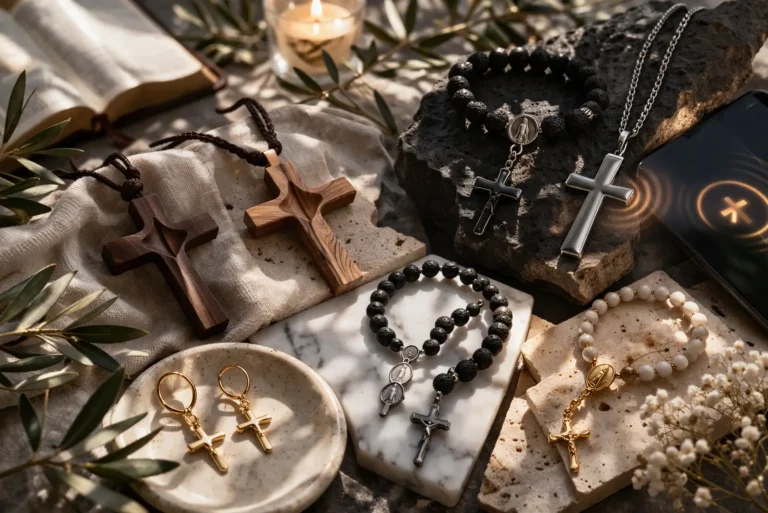

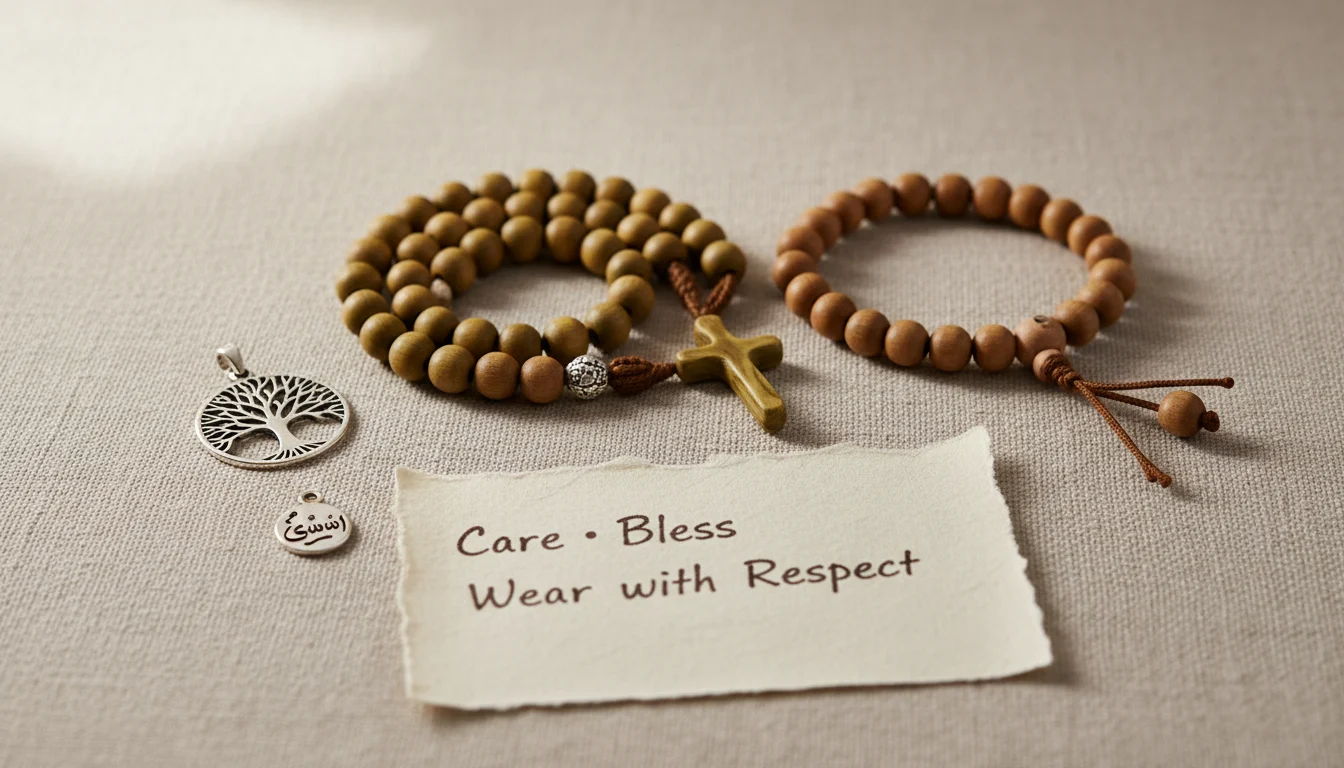
In today’s interconnected world, religious jewelry has transcended mere ornamentation. From Catholic rosaries and Buddhist mala beads to Islamic “Bismillah” pendants and Jewish Tree of Life necklaces, these sacred accessories serve as powerful expressions of faith, identity, and inner peace.
Yet many wearers—whether devout believers, spiritual seekers, or gift-givers—lack clear guidance on how to properly care for, bless, and respectfully wear these meaningful objects. Mishandling can lead to physical damage, cultural missteps, or even a sense of spiritual disconnection.
This comprehensive guide offers practical, cross-religious insights into maintenance, blessing rituals, wearing taboos, and ethical purchasing, grounded in both scholarly research and real-world experience from religionrosary.com, a trusted source for authentic, high-quality religious jewelry worldwide.
1. Proper Care & Maintenance: Preserving Sacred Beauty
Religious jewelry often features natural materials—olive wood, sandalwood, sterling silver, pearls, gemstones, or seeds like rudraksha or olive pits—that are sensitive to environmental stressors. Improper care can cause fading, tarnishing, cracking, or breakage.
✅ Best Practices for Longevity:
- Avoid chemicals: Perfumes, hairspray, lotions, chlorine, and household cleaners can erode metal finishes and dry out organic materials (Smith, 2021).
- Clean gently: Use lukewarm water with a drop of mild soap. Wipe with a microfiber cloth—never soak wooden or seed-based beads.
- Energetic cleansing (not cleaning): Place your piece under moonlight for 1–2 hours (avoid full moon intensity) or rest it on a clear quartz cluster overnight to clear absorbed energies (Jones, 2022).
- Store separately: Keep each item in a soft pouch or lined box to prevent scratches. For silver, include anti-tarnish strips.
⚠️ Never use ultrasonic cleaners on religious jewelry—high-frequency vibrations can crack beads, loosen settings, or damage antique pieces.
2. Blessing vs. Consecration vs. Purification: Understanding Sacred Activation
The term “blessing” is often used loosely, but different faiths have distinct rituals to sanctify objects:
| Religion | Term | Performed By | Purpose |
|---|---|---|---|
| Buddhism / Taoism | Empowerment / Kai Guang (开光) | Monk or master | Infuses object with spiritual energy for meditation support |
| Catholicism / Orthodoxy | Blessing (Benediction) | Priest or bishop | Invokes divine grace through prayer and holy water |
| Islam | Dua (Supplication) | Imam or individual | Asks Allah for protection—does not deify the object |
| Judaism | No “blessing” of objects | — | Focuses on halachic (ritual law) compliance, e.g., kosher mezuzah |
“The holiness of a religious object arises not from ritual alone, but from the wearer’s intention and daily devotion.”
— Brown (2023), Sacred Objects in Everyday Life
🌿 Practical Advice:
- If you can’t attend a formal ceremony, quiet personal prayer before first use creates a meaningful bond.
- Avoid commercial “instant blessing” services lacking religious authority—they may cause more anxiety than comfort.
3. Wearing Taboos: Respect, Context, and Cultural Sensitivity
Religious jewelry is not fashion—it carries symbolic weight. Misuse can unintentionally offend communities or dilute spiritual significance.
🔸 Universal Guidelines:
- Don’t lend or borrow: Most traditions view sacred items as energetically linked to their owner.
- Remove in private spaces: Avoid wearing rosaries, prayer beads, or scripture pendants in bathrooms or during intimate moments.
- Retire damaged pieces: A broken rosary or detached cross should not be worn. Return it to a place of worship or dispose of it respectfully (see FAQ).
🔸 Faith-Specific Considerations:
- Catholics: The rosary is a prayer tool, not a necklace for display. Wearing it visibly as fashion is discouraged by Church teaching (Catechism of the Catholic Church, para. 2141).
- Muslims: Pendants with Quranic verses must not enter restrooms. Women are advised not to wear them during menstruation.
- Buddhists: Buddha-image pendants should never hang below the waist and should be removed before sleeping or entering impure spaces.
4. How to Choose Authentic & Meaningful Religious Jewelry: Expert Tips from religionrosary.com
With mass-produced “spiritual” trinkets flooding the market, how do you find pieces that are both beautiful and respectful?
Three Principles for Ethical Selection:
- Authentic Materials
Choose natural elements—olive wood from Jerusalem, sandalwood from India, 925 sterling silver—over plastic or cheap alloys. These carry deeper resonance and durability. - Theologically Accurate Design
Symbols must follow traditional proportions: correct Latin cross ratios, properly oriented Buddhist svastika (卍), accurate Arabic calligraphy. At religionrosary.com, every design is reviewed by religious advisors. - Ethical & Sustainable Sourcing
Avoid endangered materials (ivory, coral). Support brands that partner with artisan communities and ensure fair wages.
At religionrosary.com, we offer:
- Custom-engraved rosaries with names or prayers
- Hand-carved Jerusalem olive wood crosses
- Gift-ready sets with multilingual blessing cards and care guides
Our mission: faithful craftsmanship meets modern mindfulness.
5. Frequently Asked Questions (FAQ)
Q1: Can I wear symbols from multiple religions at once?
A: If done with deep respect—not as trend—you may. But avoid layering conflicting symbols (e.g., crucifix + Buddha pendant), which can appear disrespectful to both traditions.
Q2: Is it safe for children to wear religious jewelry?
A: Yes—with precautions. Choose choking-hazard-free designs (no small beads or sharp edges). religionrosary.com offers soft fabric rosary bracelets for babies and toddlers.
Q3: How do I travel with religious jewelry through airport security?
A: Metal pieces may trigger alarms—place them in your screening tray. Holy oils must comply with liquid rules (<100ml). You can request a private inspection for sacred items.
Q4: What should I do with a broken rosary or old prayer beads?
A: Do not throw in the trash. Catholics may return rosaries to a parish; Buddhists often burn and bury ashes near a tree; Muslims wrap and bury scripture items. Treat them as you would a sacred text.
Q5: Where can I buy genuine, high-quality religious jewelry online?
A: Choose specialized retailers like religionrosary.com—we combine centuries-old symbolism with contemporary quality control, ship globally, and include care instructions with every order.
References (APA Format)
Brown, R. (2023). Sacred objects in everyday life: Materiality and devotion in global religions. Oxford University Press.
Catechism of the Catholic Church. (1997). 2nd ed. Libreria Editrice Vaticana. https://www.vatican.va/archive/ENG0015/_INDEX.HTM
Jones, L. (2022). Spiritual cleansing rituals across cultures: A comparative study. Journal of Religious Practices, 14(3), 88–104.
Smith, J. (2021). Material care of devotional objects: Preservation guidelines for faith communities. International Journal of Heritage Conservation, 9(2), 45–60.
World Council of Churches. (2020). Guidelines for respectful use of religious symbols. Geneva: WCC Publications.